We are bombarded with “anti-aging” messages that treat getting older as an inevitable decline. But what if the entire conversation about successful aging is fundamentally wrong?
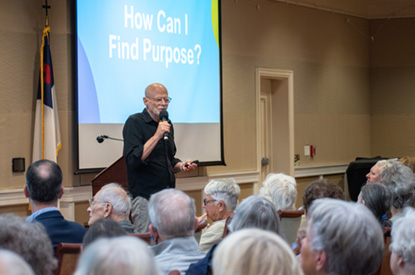
Marc Middleton, CEO of the multimedia platform Growing Bolder, offered advice on how aging successfully focuses less on genetics and more on your internal operating system. He offers five unexpected truths that challenge what we know about achieving a high-quality life as we age. If you want to dramatically increase the quality (and possibly the length) of your life, the journey starts not with a magic pill, but with a mindset shift.
Here are five things you haven’t heard about healthy aging:
1. Our Mindset Isn’t Just Important—It’s Biological Fuel
Middleton asserts that the greatest hurdle to healthy aging is mental, not physical. Your beliefs translate into biological reality.
“The number one change that we need to make in our lifestyle is our mindset about aging,” Middleton said.
This isn’t just about “thinking positive.” Middleton emphasizes a mind-body connection that translates belief into biological reality. The things you accept as inevitable will become inevitable.
The shift, then, is about taking personal responsibility for your narrative. Many people wait for something external—a new diagnosis, a financial windfall, or a retirement date—to grant them happiness. Middleton pushes back hard on this passive approach, stressing that quality of life is not a gift.
“There’s never going to be anything that’s going to give you quality of life,” he said. “Quality of life is something you have to earn on your own. Quality of life is something that you have the capacity and the ability to create, and it all starts with mindset.”
2. The “Rate of Decline” is a Myth Based on Old, Sedentary Data
For decades, the public has accepted the notion that there is an established rate of decline—a steady, unavoidable physical and cognitive fall-off that begins around a certain age. According to Middleton, that notion is obsolete.
He explains that the foundational research defining these limits was fundamentally flawed because it studied people who were mostly sedentary. Those studies were conducted before the current era of active aging.
Today, we see older adults engaged in marathon running, competitive sports, lifelong learning, and physically challenging activities. These people are rewriting the rules of what’s possible, proving that the old models of decline simply don’t apply to an active, engaged life.
“All of these studies that we read years ago were done with groups of sedentary adults… almost everything that we came to believe about aging, what was possible, the rate of decline, has proven to be not true,” Middleton said.
The takeaway is clear: your physical and cognitive limitations aren’t set in stone by your birth year. They are determined by your level of engagement.
3. Embrace Your Age of Liberation: Welcome the Risk of Failure
If the first step in successful aging is changing your internal mindset, the second is translating that mindset into external action—specifically, by taking risks.
Marc Middleton argues that as we age, we often become risk averse. We avoid situations that might lead to embarrassment, discomfort, or, worst of all, failure. But this aversion is what stifles growth and quality of life.
“I think older adults need to be encouraged to take risks… they have to be encouraged to take the risk of failure, of embarrassment, of personal unease,” Middleton said.
This period of life, he suggests, should be seen as an Age of Liberation, a time when the pressure of climbing the career ladder or raising young children is largely gone. It is a massive opportunity to finally live for yourself, but you have to push past the internal voice of caution.
“If not now, when?” Middleton said. “When are you going to get over yourself? When are you going to lean into life? It’s one of the great opportunities of growing older, but it’s also one of the things that most people don’t do.”
4. Self-Branding is a Health Strategy (Declare Who You Are)
Following the call to embrace risk and action, Marc Middleton offers an actionable tool for locking in these new behaviors: creating a realistic self-image, or a personal brand.
This concept goes far beyond simple positive affirmations; it is about identity. Research shows that declaring yourself to be a certain kind of person has tangible health benefits because your identity drives your behavior.
“Research has shown that declaring yourself a non-smoker has health benefits beyond simply not smoking,” Middleton said.
The idea is to adopt an identity that aligns with the lifestyle you want to lead. Middleton encourages specifics: Don’t just plan to walk; declare, “I am a walker.” Don’t just think about encouraging others; brand yourself “an encourager.”
“Research has shown that any factor that can manipulate your health and well-being is improved by belief. When you choose to do something and then believe in it, it makes it work better. So if you believe that lifting weights is good for you, the results are going to be better than simply lifting weights.”
By purposefully crafting your self-image and choosing to believe in its power, you fundamentally change how you approach healthy aging.
5. Your Zip Code Trumps Your Genetic Code: Community is Immunity
The final, perhaps most compelling piece of advice from Marc Middleton concerns the critical role of social connection. While we often obsess over our DNA, he argues that the environment we choose is far more important to our healthy longevity.
“Community is immunity against depression, anxiety, many of the diseases of aging, including cognitive decline.”
This isn’t just about having friends; it’s about having a network of support and engagement that acts as a biological shield. The absence of this connection leaves one vulnerable to the diseases often associated with aging.
“It has been proven that your zip code is more important to healthy longevity than is your genetic code,” Middleton said.
Choosing an active, engaging community is one of the single most powerful decisions you can make to improve both the length and the quality of life, essentially giving yourself a boost of natural, social immunity.
Marc Middleton’s insights flip the script on successful aging. His five truths—mindset, myth of decline, risk-taking, self-branding, and community—all lead to a single conclusion: your later years aren’t defined by what you lose, but by what you choose to create. The anti-aging secret isn’t a complex biological intervention; it’s a commitment to a purposeful, more engaged life.
Ready to create your purposeful, engaged life?
If you’re looking to put these mindset shifts into action and maximize your healthy longevity, an engaged community is key. Learn more about living a happy, healthy, and purposeful life at one of our vibrant Life Plan Communities throughout Florida at WestminsterCommunitiesFL.org today.